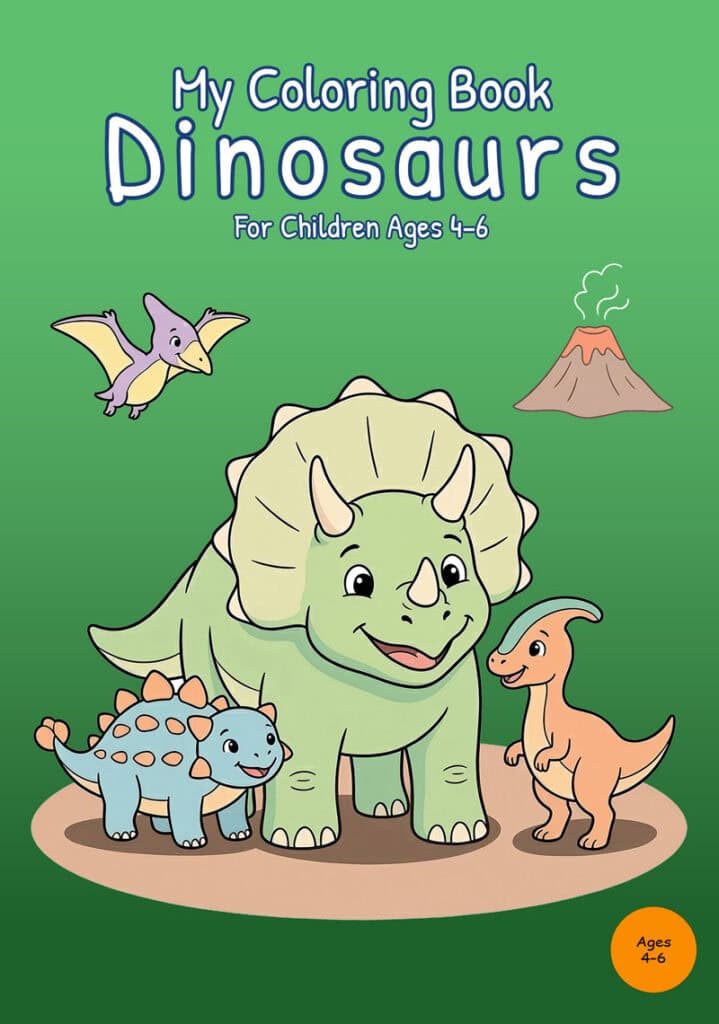
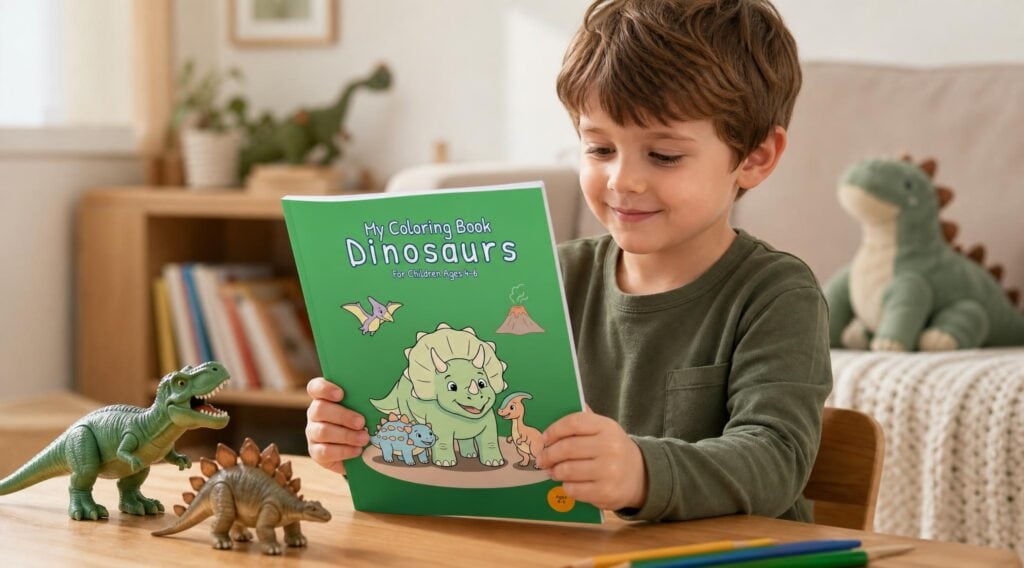
My Coloring Book
Dinosaurs: For Children Ages 4–6
Note: The buttons lead to Amazon or Etsy.As an Amazon Associate I earn from qualifying purchases. Sylwias Ausmalwelt may receive a credit toward Etsy fees when you purchase through our Etsy link. The price you pay stays the same.
Enjoy our creative ideas!
👧 Age: 4–6 years
📄 60 varied dinosaur coloring pages
🖍️ Simple and slightly more detailed illustrations
🎨 Works well with colored pencils, crayons, and markers
🖤 Black reverse sides on the coloring pages
🦕 My Coloring Book Dinosaurs: For Children Ages 4–6
From the three horns of a Triceratops to the long neck of a Brachiosaurus, every page opens a different window onto the prehistoric world. Armored dinosaurs, swift hunters, marine reptiles, and flying creatures add even more shapes to discover.
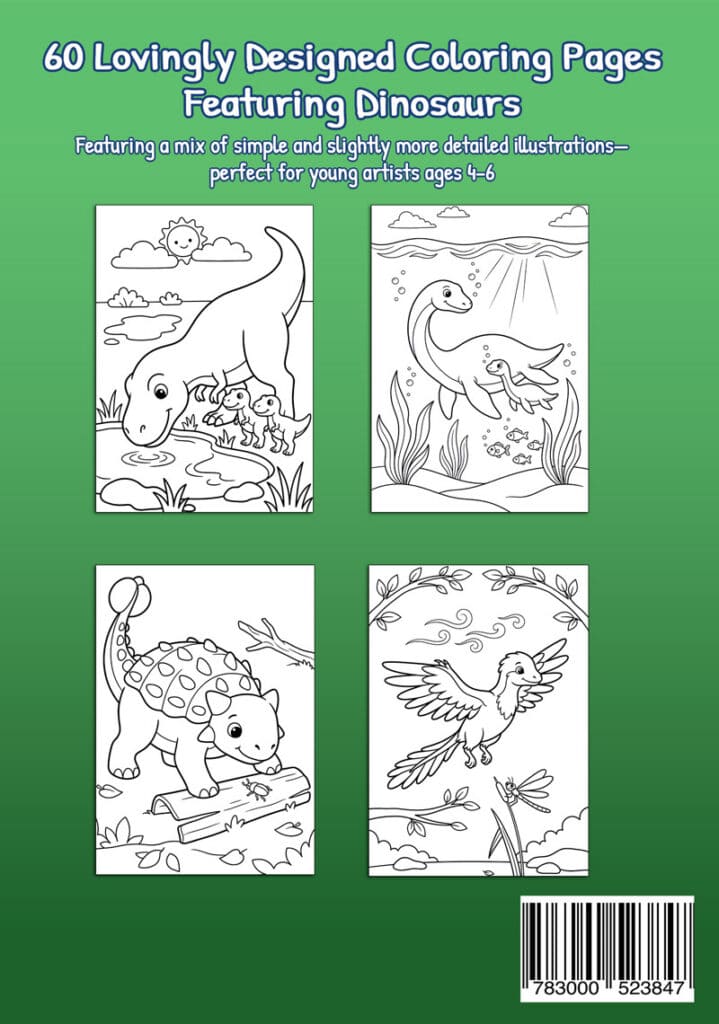
My Coloring Book Dinosaurs brings together 60 coloring pages for children ages 4–6. The collection includes T. rex, Stegosaurus, Ankylosaurus, Velociraptor, Parasaurolophus, and Spinosaurus, along with baby dinosaurs and other prehistoric animals from water and sky.
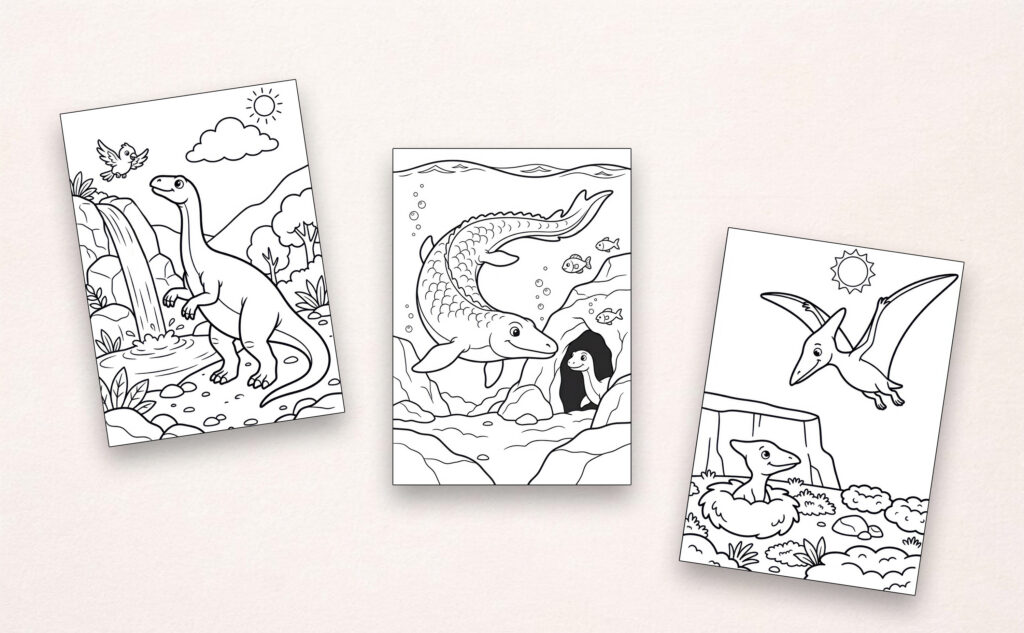
Some illustrations place one large animal at the center, while others add rocks, plants, waterfalls, underwater caves, fish, nests, or clouds. Children can choose a bold single subject or spend more time on a scene with several smaller areas to color.
🎨 Free Coloring Pages From This Book
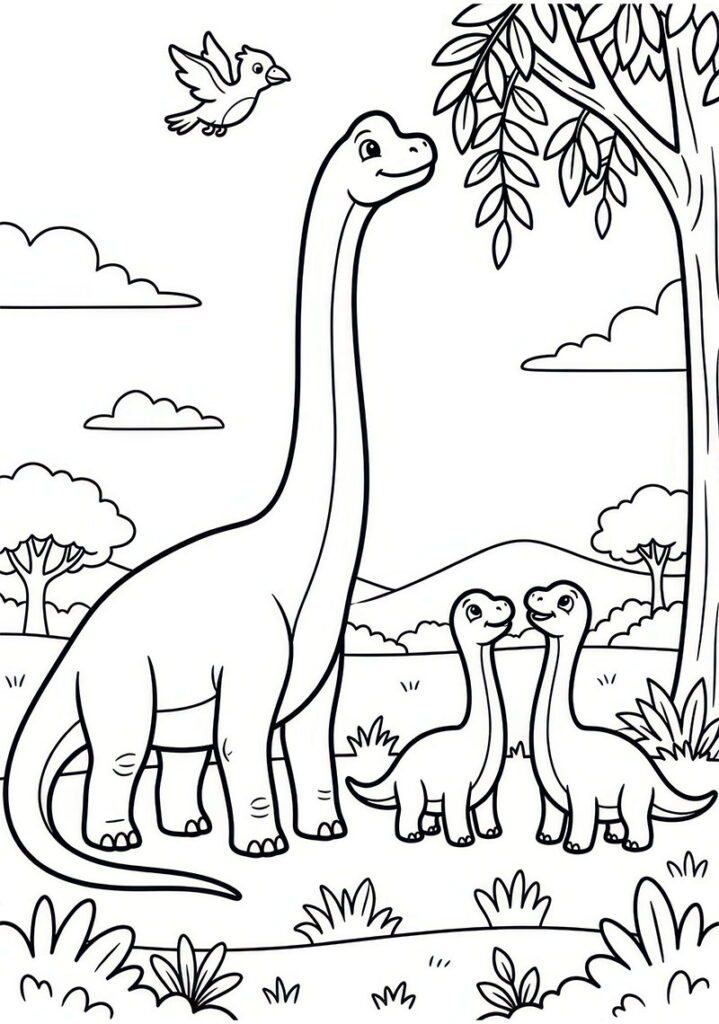
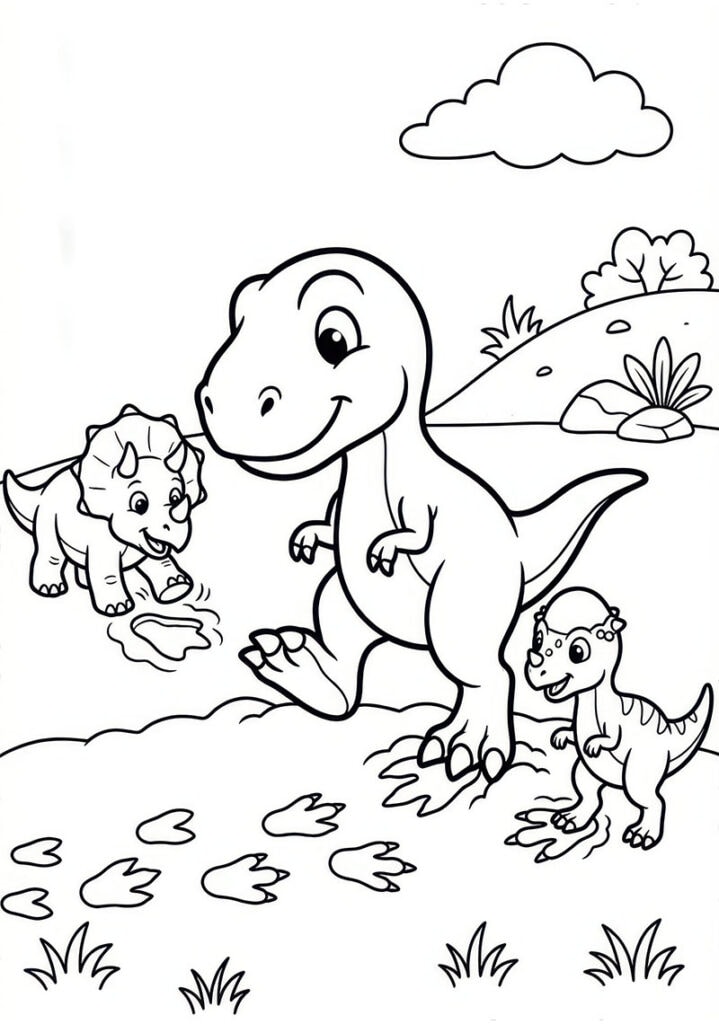
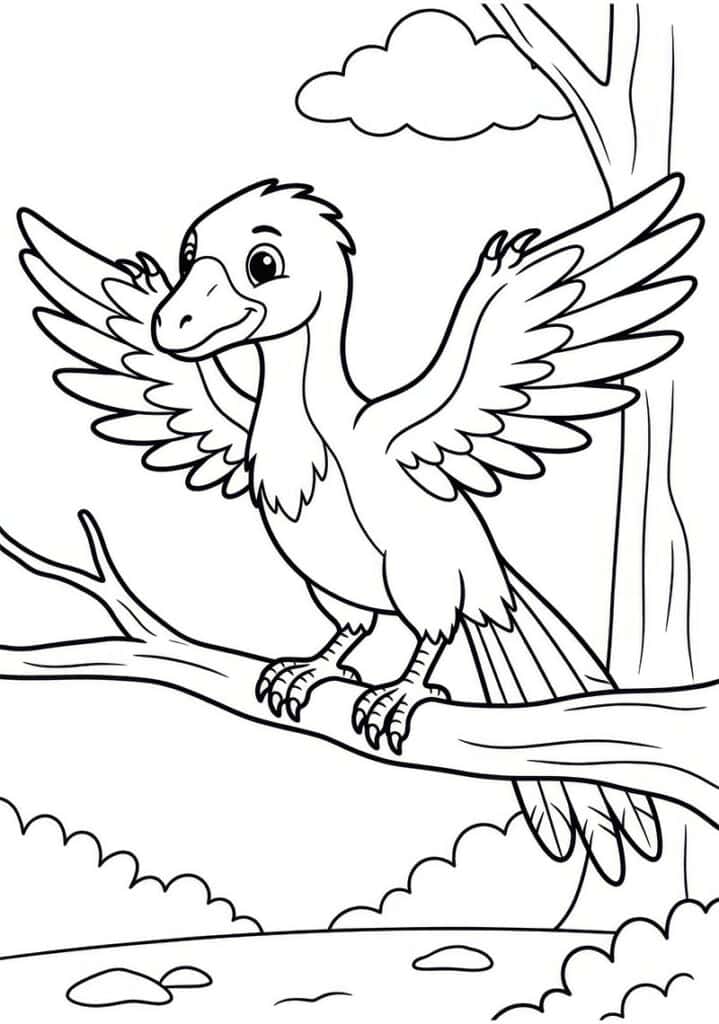
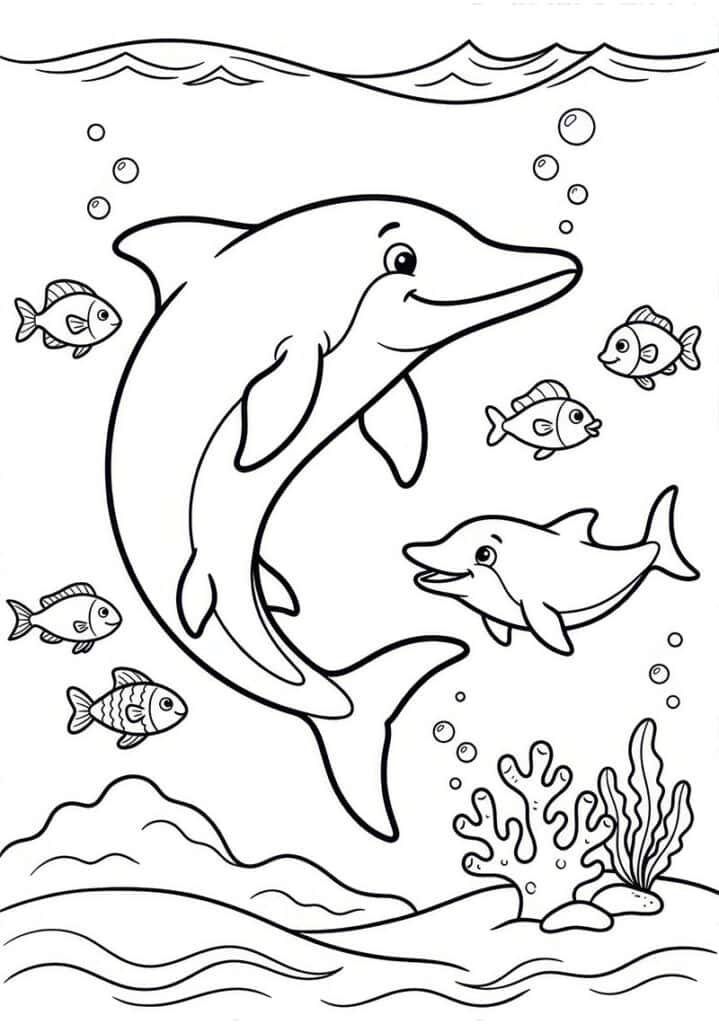
If you’d like a little peek inside the book, you’ll find a few selected sample pages here to download and print for free.
🌿 A Journey Across the Prehistoric World
The book moves through several prehistoric environments instead of staying in one landscape. Dinosaurs appear near water, among rocks and plants, and beneath open skies, while other creatures swim below the surface or glide overhead.
On land, children meet plant-eaters, horned dinosaurs, crested species, and two-legged hunters. Brachiosaurus is known for its long neck, Triceratops for its broad frill and three horns, Stegosaurus for its row of tall plates and tail spikes, and Ankylosaurus for its heavy armor and powerful tail.
There is no required starting point. A child can color a familiar T. rex, switch to a quieter family scene, and then choose an underwater animal or a pterosaur. Each page offers a different silhouette and arrangement of coloring spaces.
🦖 Dinosaurs With Unmistakable Features
Many animals can be recognized by one striking feature. T. rex has a large head and short arms; Triceratops has horns and a frill; Brachiosaurus has a long neck; Stegosaurus carries tall plates; and Ankylosaurus has a low, armored body.
Velociraptor has a lighter two-legged build, Parasaurolophus a long crest, and Spinosaurus a tall sail. Iguanodon, Carnotaurus, Dilophosaurus, and Baryonyx broaden the selection with different heads, limbs, and body proportions.
Wide bodies and large tails provide broad spaces for crayons, while teeth, claws, plates, scales, and plants invite more deliberate color choices. The differences are easy to notice without requiring realistic colors.
A horned dinosaur can be blue and orange, a Stegosaurus can have a different color on every plate, and a long-necked dinosaur can wear spots or stripes. The clear outlines leave room for familiar or completely imagined color schemes.
🌊 Prehistoric Creatures in the Water and Sky
Several pages feature marine reptiles, adding curved bodies, flippers, bubbles, fish, and rocky underwater settings. These scenes contrast with the sturdy legs, horns, and heavy tails of the land animals.
Ichthyosaurus has a streamlined outline, while Plesiosaurus and Elasmosaurus add long necks and broad flippers. Mosasaurus brings a powerful body and tail. Some scenes show a larger animal with a smaller companion beneath the waves.
In the sky, Pteranodon spreads wide wings, while Archaeopteryx introduces feathers and a more birdlike form. A flying animal may appear above a nest, near a hatchling, or among branches and clouds.
Moving between land, water, and air keeps the collection varied. Children can color a rocky seafloor after a leafy land scene, then choose an open sky with a flying prehistoric animal.
🥚 Baby Dinosaurs and Family Scenes
Large dinosaurs are balanced by smaller moments. The book includes baby dinosaurs beside adults, young long-necked dinosaurs near the water, and a hatchling resting in a nest.
An adult can be colored in deep shades, while the young animals can have lighter colors, tiny spots, or matching patterns. Children may decide whether family members look alike or each has a completely different design.
The smaller animals can also inspire an imagined story: a young dinosaur following a parent to the pond, a marine reptile exploring a cave, or a hatchling watching a pterosaur overhead.
These scenes sit naturally beside the impressive T. rex, Spinosaurus, and armored dinosaurs, bringing powerful shapes, quiet encounters, and playful color ideas together in the collection.
🖍️ From Large Shapes to More Detailed Scenes
The 60 illustrations combine simple pages with slightly more detailed pictures. Clear outlines keep the main animal easy to identify, while selected scenes add plants, rocks, water, clouds, fish, insects, or another prehistoric creature.
Across the book, children will find:
- T. rex, Triceratops, Brachiosaurus, and other familiar dinosaurs
- Horned, long-necked, crested, plated, and armored dinosaurs
- Velociraptor, Spinosaurus, Carnotaurus, and other two-legged dinosaurs
- Ichthyosaurus, Plesiosaurus, Mosasaurus, and Elasmosaurus underwater
- Pteranodon and Archaeopteryx in scenes with nests, branches, and open skies
- Baby dinosaurs and scenes with larger and smaller companions
- Large single subjects with broad spaces for shorter coloring sessions
- Fuller prehistoric landscapes with several objects and background details
This range lets children choose by interest and available time. A large Triceratops may suit a short activity, while an underwater cave or waterfall scene offers more areas to complete. The pages do not need to be colored in sequence.
One day might focus on horns and armor, another on creatures of the sea, and another on wings, nests, and baby dinosaurs. Every page belongs to the same theme, yet the coloring experience keeps changing.
🖍️ Coloring Tools That Work Well
The pages work well with:
- Colored pencils
- Crayons
- Markers
Colored pencils work well for scales, feathers, plants, and smaller spaces, while crayons cover broad bodies, skies, and water. Markers create stronger blocks of color; because ink varies, place a spare sheet of white paper behind the page as an extra precaution.
Each coloring page has a black reverse side, giving the next design a clear visual separation. The spare white sheet remains a useful extra precaution with markers. Children can also combine tools—for example, crayons on a large dinosaur and colored pencils on its plates.
🎁 A Dinosaur Gift for Young Artists
My Coloring Book Dinosaurs is a fitting choice for children ages 4–6 who enjoy T. rex, Triceratops, long-necked dinosaurs, armored species, marine reptiles, pterosaurs, and baby dinosaurs.
It makes a thoughtful gift for a birthday or holiday and a fun creative activity for family visits, vacations, rainy days, or quiet time at home. With 60 varied pages across land, water, and sky, the book offers many ways to revisit the prehistoric world.
Explore All Books in the “My Coloring Book” Series for Children Ages 4–6
Know a family who might enjoy this book?
Share it on Facebook, Pinterest, or WhatsApp: