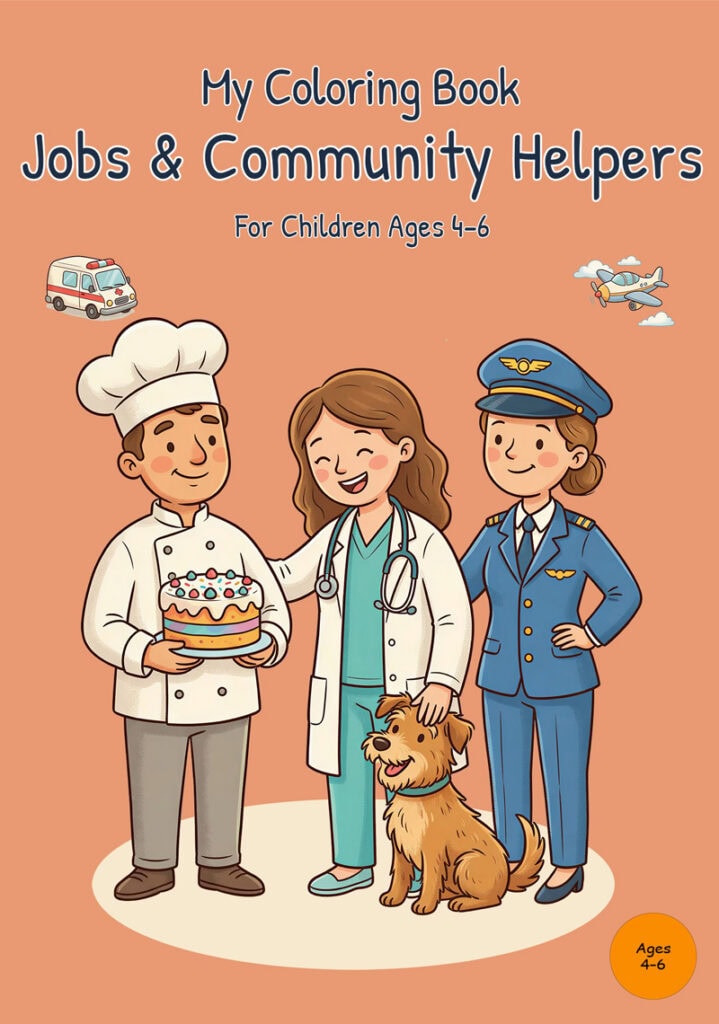
My Coloring Book
Jobs & Community Helpers: For Children Ages 4–6
Note: The buttons lead to Amazon or Etsy. As an Amazon Associate I earn from qualifying purchases. Sylwias Ausmalwelt may receive a credit toward Etsy fees when you purchase through our Etsy link. The price you pay stays the same.
We hope you enjoy our creative ideas!
🧒 Age: 4–6 years
📄 130 pages – with 60 varied coloring pages
🖍️ Ideal for colored pencils, crayons, and washable markers for children
📐 Format: 8.27 × 11.67 inches (A4)
🖤 Black page backs – better protection for the next coloring page
👩⚕️ My Coloring Book Jobs & Community Helpers: For Children Ages 4–6
A veterinarian listens to a dog’s heartbeat, a baker adds the finishing touches to a cake, and a pilot gets ready for the next flight. Across the book, familiar jobs are shown through the people, places, tools, animals, and vehicles that help make each role easy to recognize.
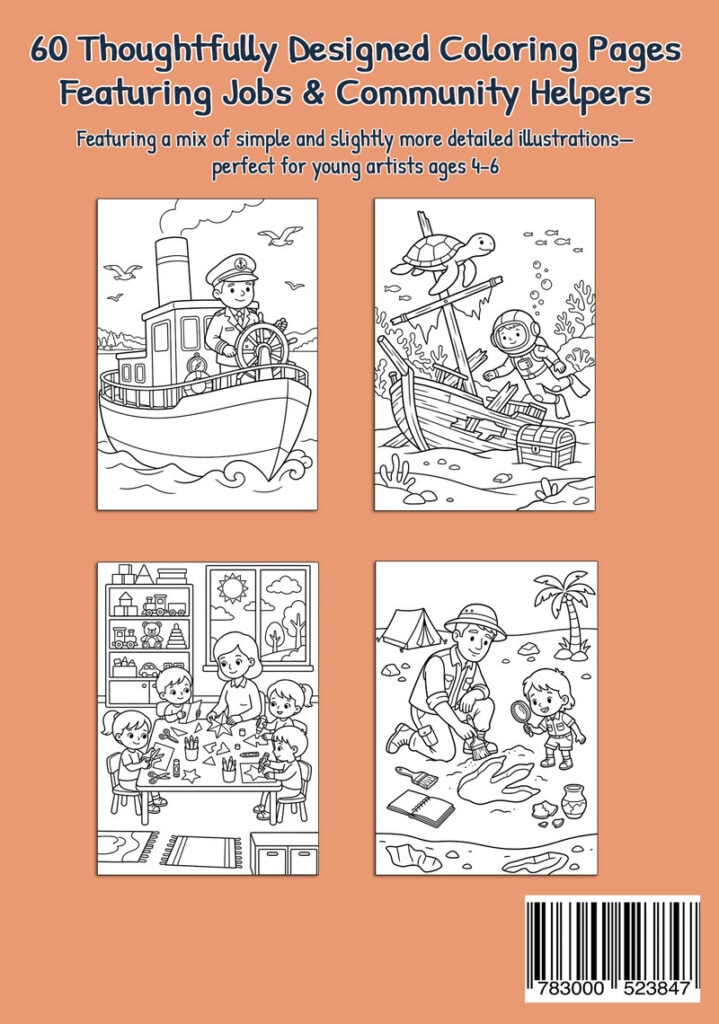
My Coloring Book Jobs & Community Helpers brings together 60 coloring pages for children ages 4–6. Doctors, dentists, veterinarians, firefighters, police officers, teachers, bakers, cooks, gardeners, mechanics, construction workers, pilots, captains, astronauts, scientists, and many other workers appear in scenes connected to what they do.
The variety goes beyond portraits of people at work. A doctor’s office, veterinary clinic, bakery, kitchen, classroom, library, workshop, garden, construction site, harbor, airplane, laboratory, and outer-space setting give the pages different backgrounds and objects. Some illustrations are simple and open, while others include more equipment, people, or environmental details.
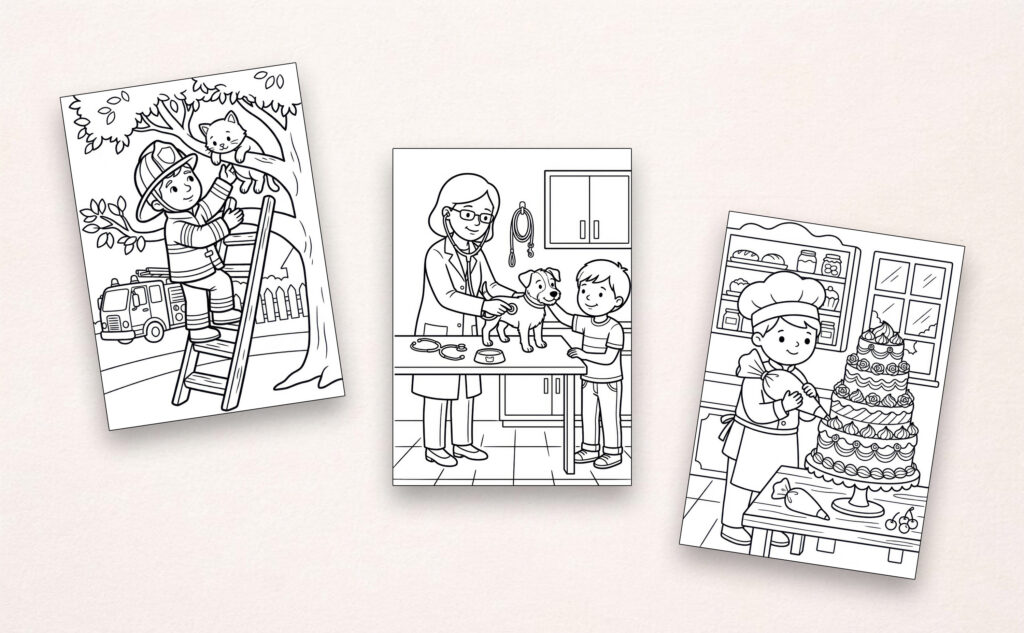
🎨 Free Coloring Pages From This Book
If you’d like a little peek inside the book, you’ll find a few selected sample pages here to download and print for free.
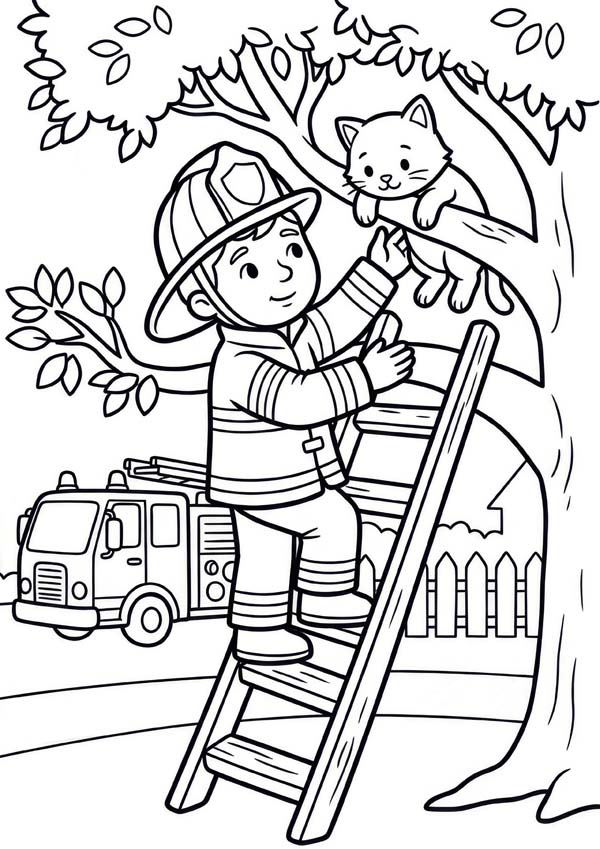
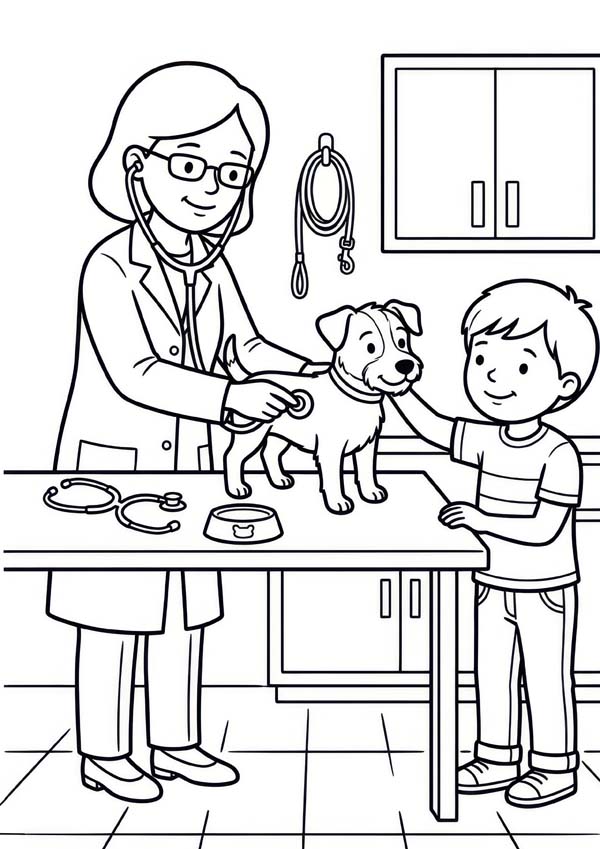
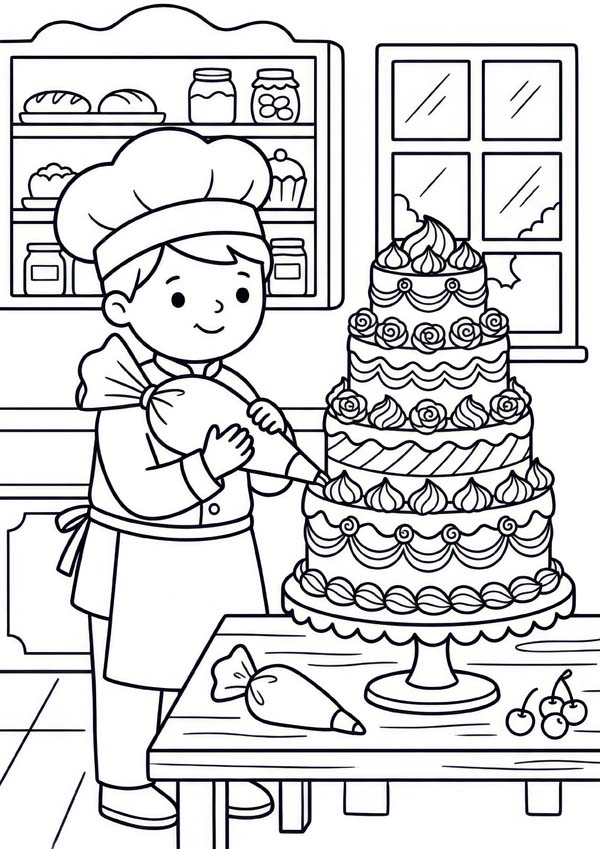
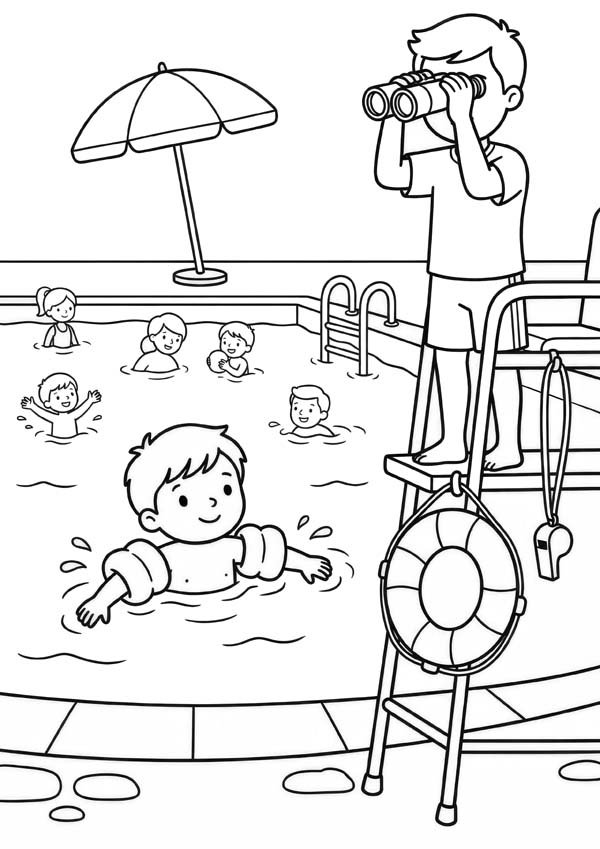
🤝 Caring for People and Animals
Several pages focus on jobs built around care and assistance. Doctors and dentists work with patients, while veterinarians care for animals in a clinic setting. Firefighters, police officers, and lifeguards bring in uniforms, emergency gear, and vehicles that make their roles visually distinct.
These scenes are grounded in recognizable places and tasks. A child may see a stethoscope beside an examination table, a fire truck near a rescue scene, or a lifeguard watching over a pool. The surrounding details help explain the job without turning the page into a lesson or requiring a long written explanation.
Animals also appear naturally in this part of the book. A dog at the veterinary clinic changes the shapes and textures on the page, while people, cabinets, medical tools, and other workplace details add smaller areas for children who enjoy taking more time with a picture.
🍰 Food, Style, Repairs, and Outdoor Work
Other pages move into places where something is prepared, made, repaired, or cared for. Bakers and cooks bring food, kitchen equipment, shelves, bowls, and work surfaces into the collection. A hairstylist introduces a salon setting, while mechanics and construction workers add tools, parts, and hands-on work.
Gardeners shift the scene outdoors, where plants, watering tools, and open spaces look very different from a bakery or workshop. These changes in setting help keep the book visually varied even when several pages feature a person as the main subject.
For coloring, this creates a useful mix of broad and smaller sections. Clothing and large work surfaces provide open areas, while cake decorations, tools, plants, shelves, and equipment offer more individual details. Children can choose a page that matches the amount of time they want to spend coloring.
✈️ Jobs That Keep People Moving
Transportation-related jobs bring another set of places and shapes into the book. Bus drivers, pilots, and captains work in vehicles rather than in one fixed room, so their pages include large windows, controls, seats, decks, roads, water, or sky.
A pilot can appear with an airplane and airport details, while a captain is connected to a boat and the harbor. These scenes make the workplace part of the subject instead of treating the vehicle as a separate object. They also show that a job can involve traveling from place to place.
The larger vehicle shapes give children broad areas to color, and the uniforms, controls, windows, passengers, or surrounding scenery add smaller sections. That contrast makes the travel pages feel different from clinics, classrooms, kitchens, and workshops elsewhere in the book.
📚 Classrooms, Libraries, Labs, and Discovery
Teachers and preschool teachers bring the collection into learning spaces, with tables, books, shelves, classroom materials, and children appearing around them. A library changes the setting again, using rows of books and quieter surroundings instead of vehicles or work equipment.
Scientists add laboratories, instruments, and observation to the mix, while astronaut scenes extend the idea of work all the way into space. These pages introduce environments and objects that may be less familiar than a bakery or doctor’s office, but the person’s role remains clear through the scene around them.
Together, these settings broaden the book beyond the jobs children see most often in town. One page can feel immediately familiar, while the next introduces a laboratory, an aircraft, a harbor, or outer space and offers a new collection of shapes to color.
🧰 Clothing, Tools, Vehicles, and Workplaces
Work clothing, equipment, vehicles, and surroundings help distinguish one job from another. A chef’s hat, firefighter helmet, pilot uniform, stethoscope, toolbox, garden tools, or construction equipment can make a role recognizable before a child knows every job title.
Across the book, children will find:
- Doctors, dentists, veterinarians, firefighters, police officers, and lifeguards
- Teachers, preschool teachers, and learning environments
- Bakers, cooks, hairstylists, gardeners, mechanics, and construction workers
- Bus drivers, pilots, captains, astronauts, and scientists
- Animals, vehicles, tools, uniforms, and everyday work objects
- Clinics, kitchens, workshops, classrooms, gardens, construction sites, harbors, and laboratories
- Simple pictures with clear main subjects and slightly more detailed workplace scenes
Because the surroundings change so much, the book can move from one clear figure to a scene with a vehicle, an animal, several people, or a room full of objects. Children can browse by favorite job, vehicle, animal, or simply by whichever page looks most interesting at the moment.
🖍️ Coloring Tools for Large Areas and Small Details
The pages work well with:
- Colored pencils
- Crayons
- Regular markers
Colored pencils are useful for tools, uniforms, shelves, food, and smaller workplace details, while crayons can cover larger clothing areas, vehicles, furniture, and backgrounds. Regular markers can create stronger blocks of color. When using markers, place an extra sheet of white paper beneath the page being colored. Very wet markers and watercolor paints are not recommended.
The back of each coloring page is printed black to help protect the following page. The extra sheet remains a useful precaution when markers are used.
🎁 A Gift for Children Curious About How People Work
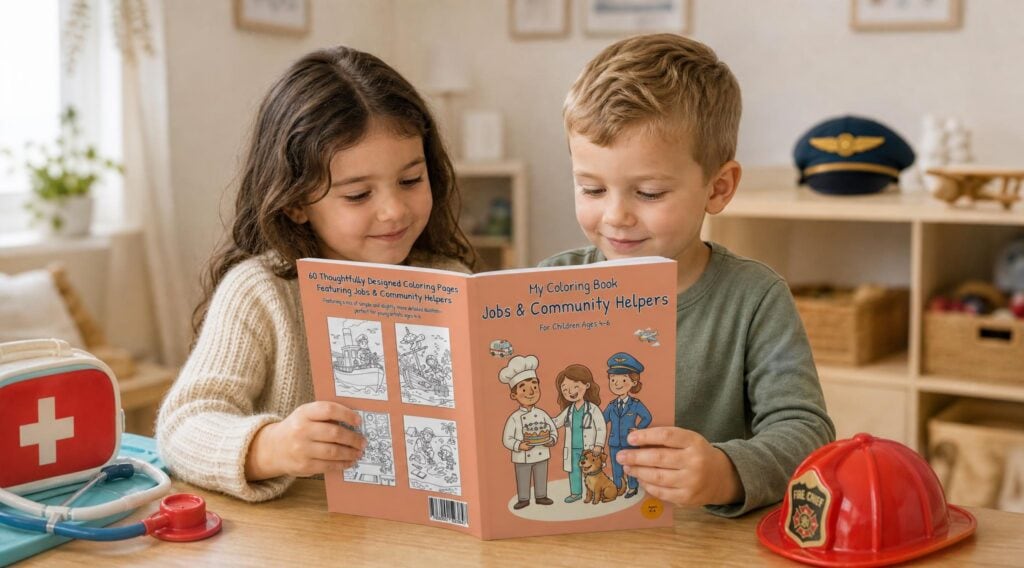
My Coloring Book Jobs & Community Helpers is a thoughtful choice for children ages 4–6 who enjoy coloring people, vehicles, animals, tools, and everyday places while discovering a wide range of jobs.
It can be given for a birthday, used in preschool or kindergarten, packed for vacation, brought out on a rainy day, or saved for a quiet creative break at home. With 60 varied pages, children can return to the book and choose a different worker, workplace, or helping role each time.
Explore All Books in the “My Coloring Book” Series for Children Ages 4–6
Know a family who might enjoy this book?
Share it on Facebook, Pinterest, or WhatsApp.