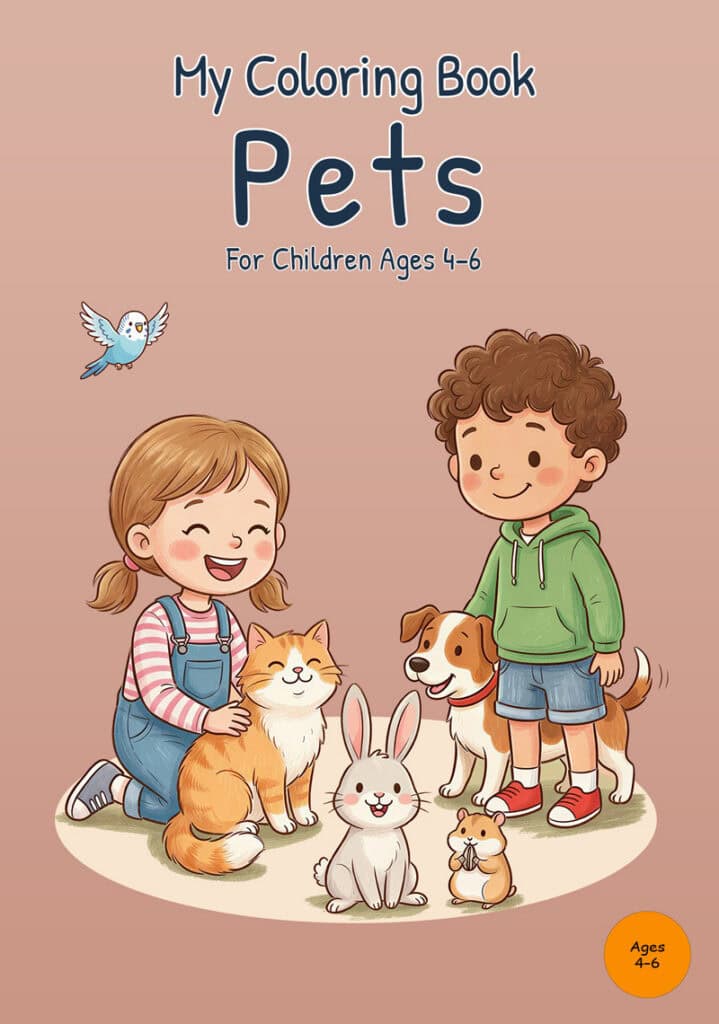

My Coloring Book
Pets: For Children Ages 4–6
Note: The buttons lead to Amazon or Etsy. As an Amazon Associate I earn from qualifying purchases. Sylwias Ausmalwelt may receive a credit toward Etsy fees when you purchase through our Etsy link. The price you pay stays the same.
We hope you enjoy our creative ideas!
🧒 Age: 4–6 years
📄 130 pages – with 60 varied coloring pages
🖍️ Ideal for colored pencils, crayons, and washable markers for children
📐 Format: 8.27 × 11.67 inches (A4)
🖤 Black page backs – better protection for the next coloring page
🐾 My Coloring Book Pets: For Children Ages 4–6
A cat climbs a scratching post, two children brush a pony, and fish circle a tiny castle inside an aquarium. From playful pets at home to animals in gardens, stables, tanks, and enclosures, each page brings a different pet-centered moment to color.
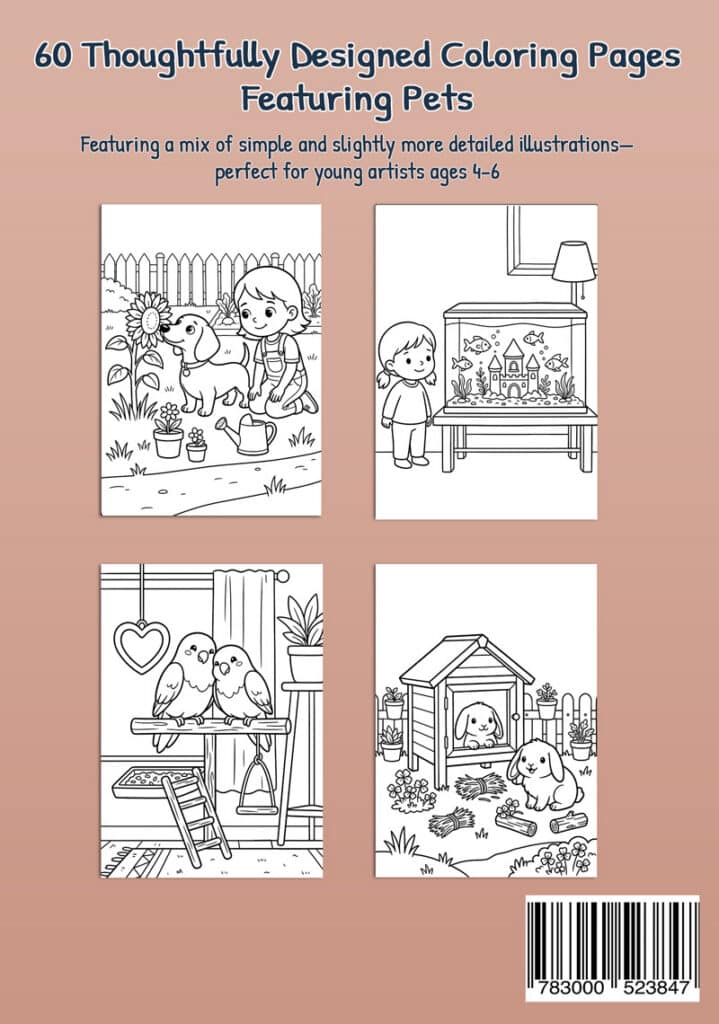
My Coloring Book Pets brings together 60 coloring pages for children ages 4–6. Dogs, cats, rabbits, guinea pigs, hamsters, mice, birds, fish, turtles, ponies, and other animal friends appear alongside the places and everyday objects connected with their care.
Some illustrations focus on one easy-to-recognize animal, while others include toys, bowls, brushes, plants, pet beds, small houses, aquariums, or terrariums. Children can choose broad, simple areas or pages with more little details to explore.
🎨 Free Coloring Pages From This Book
If you’d like a little peek inside the book, you’ll find a few selected sample pages here to download and print for free.
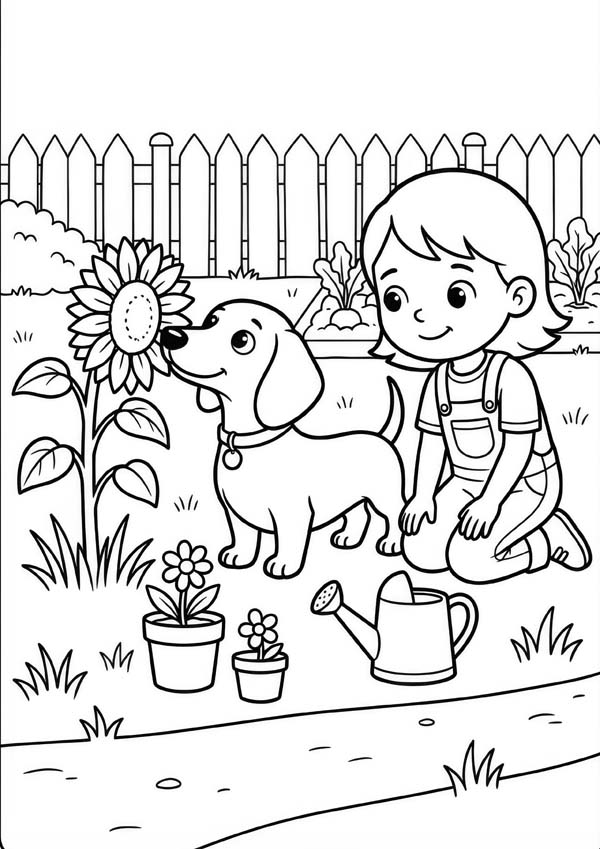
🐶 Dogs and Cats in Familiar Home Settings
Dogs and cats appear in several everyday settings, from the garden to rooms inside the home. A dog may be shown with a toy or near plants outdoors, while a cat can turn furniture, cushions, or a cat tree into part of the scene. These familiar surroundings make the animals easy for young children to recognize.
The shapes change with each animal. A dog brings floppy or pointed ears, paws, a collar, and a wagging tail, while a cat adds whiskers, a long tail, and softer curves. Large bodies and faces provide open coloring areas, and nearby toys, rugs, windows, or plants add smaller sections when children want more detail.
One scene shows a cat stretching up a tall scratching post while a child watches nearby. The pet remains the clear focus, while the room and cat furniture give the picture a sense of place instead of presenting the animal as an isolated figure.
🐰 Rabbits, Guinea Pigs, Hamsters, and Small Pet Spaces
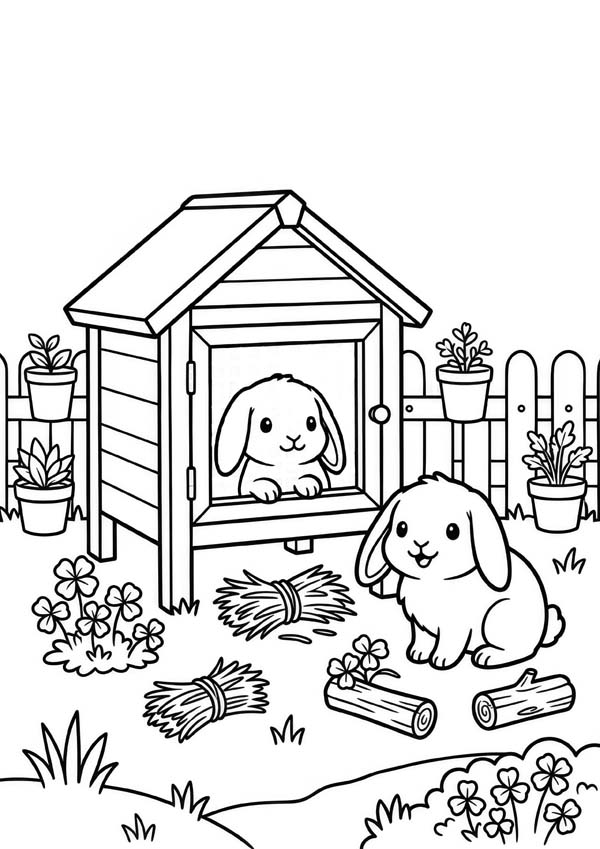
Rabbits, guinea pigs, hamsters, and mice introduce smaller animals and different kinds of pet spaces. A rabbit hutch, enclosure, wheel, bedding, food, or little shelter can become part of the picture, helping each scene look different even when the animals are similar in size.
These pages invite children to notice the objects around the animal. A bowl may sit beside a small house, hay can be stacked near a hutch, or a hamster wheel may become a large circular shape in the background. The accessories add context without crowding the main subject.
The animals themselves also bring variety. Long rabbit ears, the round body of a hamster, the dense coat of a guinea pig, and the small features of a mouse create different outlines and coloring areas. Children can move between simple animal portraits and fuller enclosure scenes depending on what catches their attention.
🐠 Birds, Fish, Turtles, and Other Pet Environments
Not every pet scene takes place on the floor or in the yard. Birds, fish, turtles, and other small pets introduce perches, water, tanks, terrariums, plants, and enclosures that look very different from a dog bed or rabbit hutch.
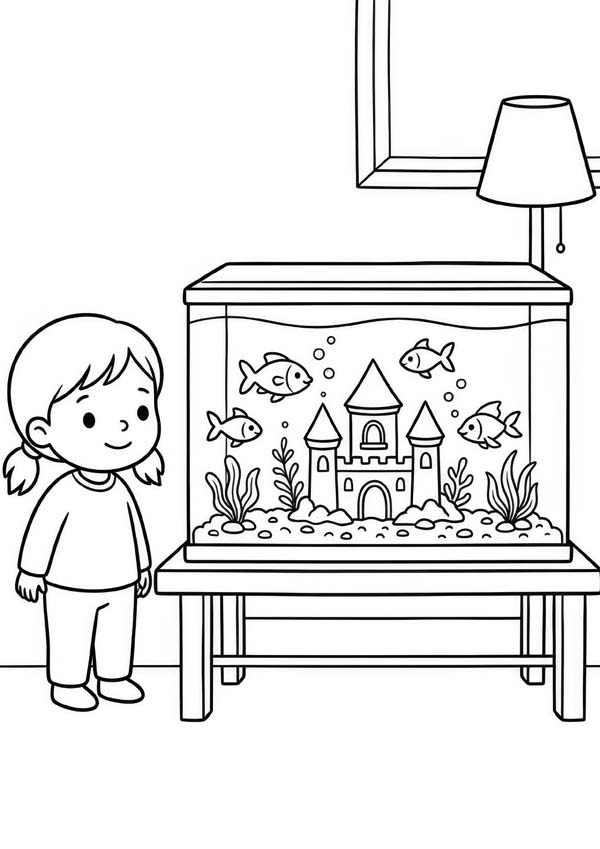
Aquarium pages combine fish with aquatic plants, bubbles, decorations, and the shape of the tank itself. One scene places a child beside an aquarium with a small underwater castle, creating many separate areas that can be colored one at a time.
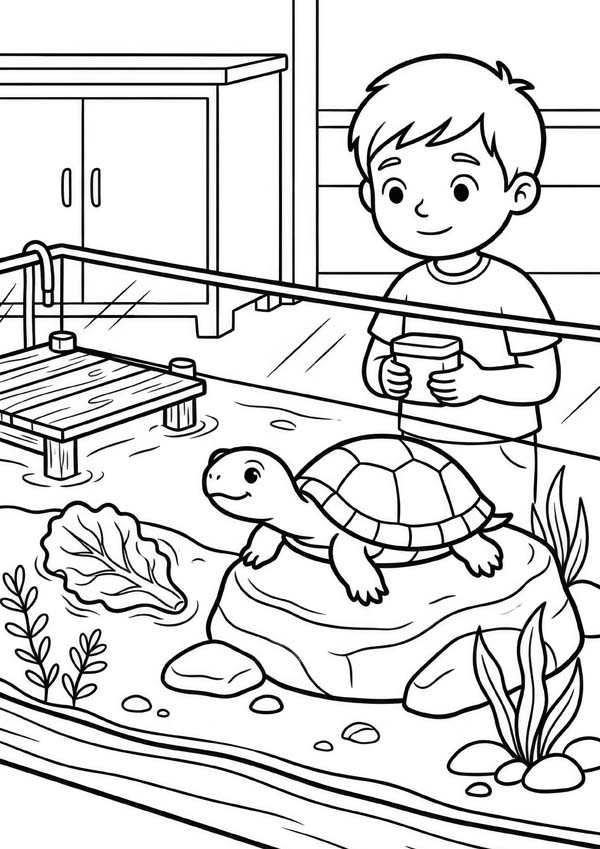
Birds add feathers, wings, and perches, while turtles bring rounded shells and low, sturdy shapes. A terrarium scene can include branches, leaves, rocks, and a pet among the plants, giving children another kind of environment to explore with color.
Ponies expand the collection into the stable and outdoor world. One current sample shows two children brushing a pony beside grooming supplies, so the animal, the care activity, and the stable setting all become part of the same page.
🥕 Feeding, Grooming, and Everyday Pet Care
Pet life includes more than playing and cuddling. Feeding, brushing, watching, cleaning, and making sure an animal has a comfortable place to rest all appear through familiar objects and simple care scenes.
Bowls, brushes, pet food, beds, toys, hutches, aquariums, and terrariums help distinguish one situation from another. A child can color the animal first and then move to the things around it, choosing different colors for bedding, dishes, toys, plants, and other small accessories.
The book also includes a veterinary setting, giving the collection another recognizable part of pet care. These scenes are presented as friendly everyday moments rather than as lessons, leaving room for families to talk about what they notice while the coloring page remains the main activity.
🖍️ Simple Pet Pictures and More Detailed Scenes
The 60 illustrations combine clear, easy-to-recognize animals with pages that include a little more detail. Some center on one pet with broad open areas, while others add children, furniture, plants, toys, food, grooming supplies, or a complete pet environment.
Across the book, children will find:
- Dogs and cats in gardens, bedrooms, and living spaces
- Rabbits, guinea pigs, hamsters, mice, and other small pets
- Birds, fish, turtles, ponies, and varied animal friends
- Hutches, enclosures, aquariums, terrariums, and stable scenes
- Bowls, pet beds, brushes, food, toys, and grooming supplies
- Feeding, grooming, playtime, and other everyday pet moments
- Simple main subjects and slightly more detailed pet scenes
The layouts change with the animals. Fur, feathers, fins, shells, plants, furniture, and accessories create different shapes to fill. Children can pick a simple page or spend more time with a room, enclosure, aquarium, or stable scene.
🖍️ Coloring Tools for Fur, Feathers, and Small Details
The pages work well with:
- Colored pencils
- Crayons
- Regular markers
Colored pencils are useful for whiskers, feathers, plants, toys, and smaller accessories, while crayons work well across larger areas such as fur, pet beds, walls, rugs, and outdoor backgrounds. Regular markers can create stronger blocks of color.
When using markers, place an extra sheet of white paper beneath the page being colored. Very wet markers and watercolor paints are not recommended. The back of each coloring page is printed black to help protect the following page.
🎁 A Pet-Themed Gift for Young Animal Fans
My Coloring Book Pets is a thoughtful choice for children ages 4–6 who enjoy dogs, cats, rabbits, small pets, birds, fish, turtles, ponies, and the everyday routines that come with caring for animals.
It can be given for a birthday, used in preschool or kindergarten, packed for vacation, brought out on a rainy day, or saved for a quiet creative break at home. With 60 varied pages, children can return to the book and choose a different pet, care activity, or animal setting each time.
Explore All Books in the “My Coloring Book” Series for Children Ages 4–6
Know a family who might enjoy this book?
Share it on Facebook, Pinterest, or WhatsApp.